
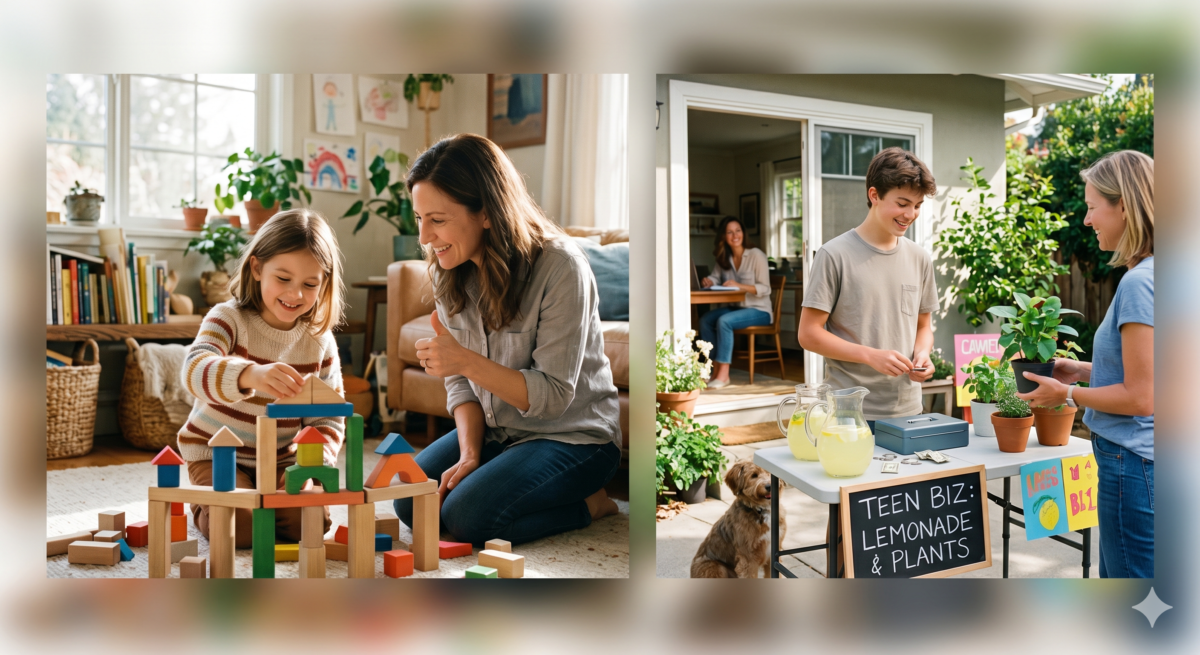
For parents of children and teens, the hardest part of supporting children’s self-confidence is knowing when to step in and when to step back. Too much fixing can quietly teach doubt, while too much pressure can make mistakes feel unsafe. Confidence is more than a bold personality; it’s the everyday foundation for lifelong success skills like building resilience, taking healthy risks, and staying steady when life gets bumpy. Small daily choices at home can shape a positive self-image and deep confidence in children.

Quick Key Takeaways for Building Confidence
-
Praise effort and progress, not just achievements, to build lasting confidence.
-
Support age-appropriate independence by letting kids try, choose, and take on responsibilities to foster inner confidence.
-
Celebrate each child’s uniqueness to strengthen self-worth and self-acceptance.
-
Treat setbacks as learning moments to build resilience and problem-solving skills.
-
Encourage exploration while offering steady support and encouragement as kids grow.
Understanding What Builds Lasting Confidence and Self-Worth
Worth grounding this in one simple idea: self-esteem grows when kids connect who they are with what they can learn. When you notice effort, you teach them that progress is possible, not fixed. Over time, that supports the confidence and satisfaction that makes them feel steady inside.
This matters because confidence sticks best when a child feels capable, supported, and accepted, even on hard days. That safety helps them take healthy risks, handle feedback, and recover after setbacks. It also strengthens the belief in abilities that drives independence and long-term confidence.
The Puzzle Example: Picture your child struggling with a puzzle, then snapping a piece and getting upset. You stay calm, name the feeling, and praise their persistence, not just the win. Next time, they try again faster because failure feels survivable—that is how confidence is built.
Try a Teen Business Project to Grow Responsibility and Confidence
When confidence grows from real skills, teens benefit most from chances to practice those skills in the real world. A teen-run business project is a powerful way to build responsibility because it naturally requires problem-solving, decision-making, and follow-through.
As they make choices and see the results, they start to trust themselves more—not because you told them they’re capable, but because they proved it to themselves. This “proof of work” creates a cycle of increasing confidence. Optimal teen business ideas are simple and low-cost, like tutoring or pet care. If the venture takes off, registering as an LLC through a formation service can help make their goals feel official, further boosting their professional confidence.

Use Daily Moves to Strengthen Self-Confidence and Independence
Confidence grows best in small, repeatable moments, especially when kids feel noticed, capable, and trusted. Much like helping kids build lifelong healthy habits, these daily ‘moves’ are designed to build independence without piling on pressure.:
-
Praise the effort, not the outcome: Swap “You’re so smart” for a quick, specific snapshot of what they did. This teaches kids that progress comes from practice, anchoring their confidence in work ethic.
-
Offer two good choices every day: Build decision-making into routines. The “two-choice” limit keeps you in charge of boundaries while giving them the confidence of real control.
-
Run a 10-minute “try it again” reset: After a flop, set a timer for a calm redo. This turns setbacks into data, which is the backbone of lasting confidence.
-
Give one household responsibility with full ownership: Pick a job they can manage and let it truly be theirs. This reinforces their confidence in handling “operations.”
-
Create a low-pressure “micro-experiment”: Instead of a whole season, try a 2-week experiment. The goal is curiosity and follow-through, not instant talent.
-
Model brave behavior out loud: Kids learn courage by watching you handle discomfort. This shows them confidence is a skill, not a personality trait.
Common Questions Parents Ask About Raising Kids with Confidence
If you’re wondering whether you’re doing “enough,” these quick answers regarding childhood confidence can help:
-
Q: How can I encourage my child to handle setbacks without losing confidence?
-
A: Start by naming what happened without judgment, then add belief: “That was hard, and you can learn it.” Remind them that self-confidence includes trusting judgment, which grows through practice, not perfection.
-
-
Q: What are effective ways to let children make decisions that build their independence?
-
A: Offer small, real choices inside your boundaries. Confidence builds when they see their choices matter and they feel the “win” of a good decision.
-
-
Q: How do I help my child develop a positive self-image?
-
A: Normalize comparison, then pivot to identity. Focus on recognizing individual strengths to build a unique sense of confidence.
-
Build Lifelong Confidence Through Small, Steady Parenting Routines
It’s hard to watch kids struggle and still resist fixing everything for them, especially when confidence feels fragile. The steadier path is a mindset of empowering children through consistent parental support: warm connection, clear limits, and calm follow-through.
Over time, that predictability helps with nurturing resilience and developing lifelong confidence they can carry into new challenges. Consistency, not perfection, is what builds a confident, resilient child. Choose one routine from this week and practice it daily to see the shift in your child’s confidence and happiness.
You can find more strategies for setting up these foundations in this guide for moms helping kids build lifelong healthy habits.