
How Parents Can Help Kids Grow Lasting Confidence and Independence

For parents of children and teens, the hardest part of supporting children’s self-confidence is knowing when to step in and when to step back. Too much fixing can quietly teach doubt, while too much pressure can make mistakes feel unsafe. Confidence is more than a bold personality; it’s the everyday foundation for lifelong success skills like building resilience, taking healthy risks, and staying steady when life gets bumpy. Small daily choices at home can shape a positive self-image and deep confidence in children.

confidence

Quick Key Takeaways for Building Confidence

  • Praise effort and progress, not just achievements, to build lasting confidence.

  • Support age-appropriate independence by letting kids try, choose, and take on responsibilities to foster inner confidence.

  • Celebrate each child’s uniqueness to strengthen self-worth and self-acceptance.

  • Treat setbacks as learning moments to build resilience and problem-solving skills.

  • Encourage exploration while offering steady support and encouragement as kids grow.

Understanding What Builds Lasting Confidence and Self-Worth

Worth grounding this in one simple idea: self-esteem grows when kids connect who they are with what they can learn. When you notice effort, you teach them that progress is possible, not fixed. Over time, that supports the confidence and satisfaction that makes them feel steady inside.

This matters because confidence sticks best when a child feels capable, supported, and accepted, even on hard days. That safety helps them take healthy risks, handle feedback, and recover after setbacks. It also strengthens the belief in abilities that drives independence and long-term confidence.

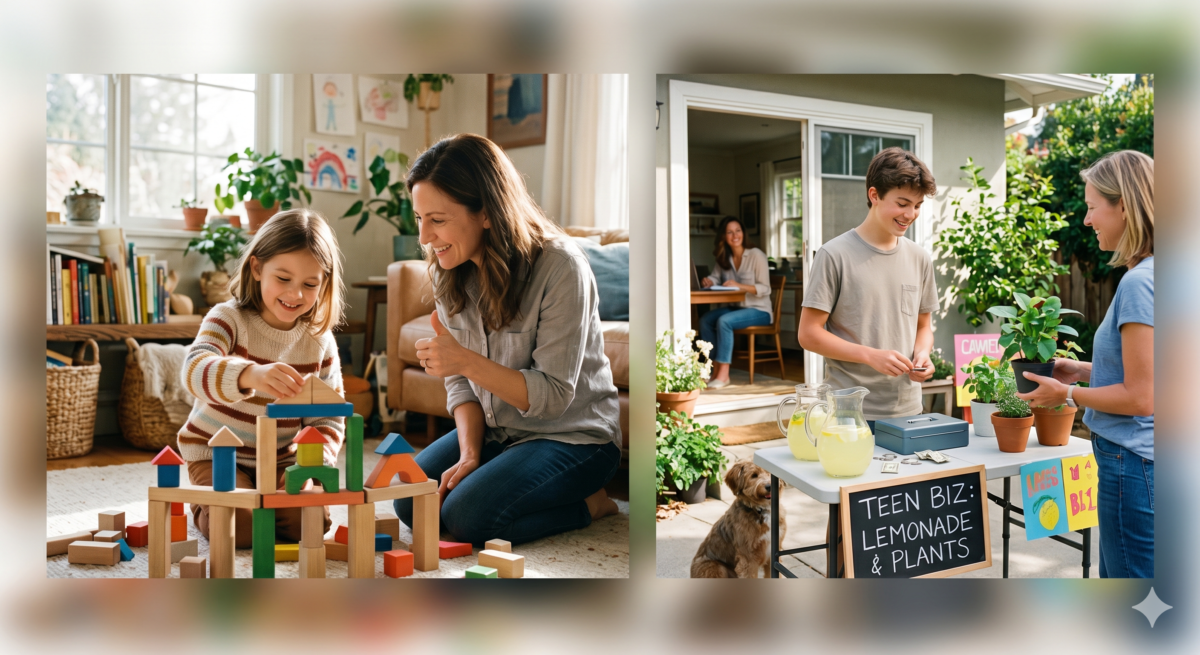
The Puzzle Example: Picture your child struggling with a puzzle, then snapping a piece and getting upset. You stay calm, name the feeling, and praise their persistence, not just the win. Next time, they try again faster because failure feels survivable—that is how confidence is built.

Try a Teen Business Project to Grow Responsibility and Confidence

When confidence grows from real skills, teens benefit most from chances to practice those skills in the real world. A teen-run business project is a powerful way to build responsibility because it naturally requires problem-solving, decision-making, and follow-through.

As they make choices and see the results, they start to trust themselves more—not because you told them they’re capable, but because they proved it to themselves. This “proof of work” creates a cycle of increasing confidence. Optimal teen business ideas are simple and low-cost, like tutoring or pet care. If the venture takes off, registering as an LLC through a formation service can help make their goals feel official, further boosting their professional confidence.

confident teen

Use Daily Moves to Strengthen Self-Confidence and Independence

Confidence grows best in small, repeatable moments, especially when kids feel noticed, capable, and trusted. Much like helping kids build lifelong healthy habits, these daily ‘moves’ are designed to build independence without piling on pressure.:

  1. Praise the effort, not the outcome: Swap “You’re so smart” for a quick, specific snapshot of what they did. This teaches kids that progress comes from practice, anchoring their confidence in work ethic.

  2. Offer two good choices every day: Build decision-making into routines. The “two-choice” limit keeps you in charge of boundaries while giving them the confidence of real control.

  3. Run a 10-minute “try it again” reset: After a flop, set a timer for a calm redo. This turns setbacks into data, which is the backbone of lasting confidence.

  4. Give one household responsibility with full ownership: Pick a job they can manage and let it truly be theirs. This reinforces their confidence in handling “operations.”

  5. Create a low-pressure “micro-experiment”: Instead of a whole season, try a 2-week experiment. The goal is curiosity and follow-through, not instant talent.

  6. Model brave behavior out loud: Kids learn courage by watching you handle discomfort. This shows them confidence is a skill, not a personality trait.

Common Questions Parents Ask About Raising Kids with Confidence

If you’re wondering whether you’re doing “enough,” these quick answers regarding childhood confidence can help:

  • Q: How can I encourage my child to handle setbacks without losing confidence?

    • A: Start by naming what happened without judgment, then add belief: “That was hard, and you can learn it.” Remind them that self-confidence includes trusting judgment, which grows through practice, not perfection.

  • Q: What are effective ways to let children make decisions that build their independence?

    • A: Offer small, real choices inside your boundaries. Confidence builds when they see their choices matter and they feel the “win” of a good decision.

  • Q: How do I help my child develop a positive self-image?

    • A: Normalize comparison, then pivot to identity. Focus on recognizing individual strengths to build a unique sense of confidence.

Build Lifelong Confidence Through Small, Steady Parenting Routines

It’s hard to watch kids struggle and still resist fixing everything for them, especially when confidence feels fragile. The steadier path is a mindset of empowering children through consistent parental support: warm connection, clear limits, and calm follow-through.

Over time, that predictability helps with nurturing resilience and developing lifelong confidence they can carry into new challenges. Consistency, not perfection, is what builds a confident, resilient child. Choose one routine from this week and practice it daily to see the shift in your child’s confidence and happiness.

You can find more strategies for setting up these foundations in this guide for moms helping kids build lifelong healthy habits.


How to Help Teens with Anxiety Build Leadership Skills Step by Step

Parents and caregivers who want to help teens with anxiety often face a difficult balancing act: nurturing leadership skills while protecting fragile mental health. The tension is real, as anxiety and depression can shrink a teen’s confidence and make even small responsibilities feel overwhelming. Pushing for “more” can backfire, yet stepping in too much can leave a young person feeling incapable. This approach ensures you can help teens with anxiety by connecting leadership to wellness, making progress feel safe, steady, and possible.

Understanding Leadership When Anxiety Is in the Mix

Leadership in teens is not a personality type. It is a set of skills like initiative, empathy, and emotional regulation that grow through practice. Anxiety, low motivation, and mood shifts can change how those skills show up, but they do not cancel them.

This matters because you can stop treating leadership as “more pressure” and start treating it as “right-sized reps.” When mental health dips, drive often dips too, and 20.17% of U.S. teenagers report a major depressive episode, so pacing and support are part of the plan.

Think of a teen who can’t lead a group project today, but can text a teammate kindly or ask one clear question. That is empathy and initiative in a smaller form, and intrinsic motivation can build from there. With this lens, you can model wellness and set anxiety-aware goals that fit your teen’s current capacity.

Build Anxiety-Aware Leadership Skills at Home

This process helps you grow leadership skills without overwhelming an anxious teen by turning “leadership” into small, doable practices at home, school, and with friends. It also protects your energy as a parent because you’ll be coaching with clear steps instead of constant crisis-managing.

  1. Model steady wellness in plain sight
    Start by naming and practicing one simple regulation tool you want your teen to copy, such as a short walk, a glass of water, or a two-minute reset before talking. Keep it visible and calm so leadership looks like self-management, not perfection. 
  2. Choose one independence task with a clear finish line
    Pick a responsibility your teen can complete in 10 to 20 minutes, like emailing a teacher, packing for practice, or ordering their own meal. Make the target specific and observable, then step back while staying available for one question. Independence is a leadership foundation because it builds “I can handle this” evidence.
  3. Set one anxiety-aware goal and scale it to capacity
    Work together to choose a goal that stretches your teen slightly without flooding them, then define the smallest version that still counts. If social anxiety is high, the goal might be greeting one person or sending one friendly text, not leading the whole group. Agree on a backup plan for tough days, so the goal stays supportive instead of turning into pressure.
  4. Teach cooperation through one small coordinating role
    Invite your teen to practice leading with others in low-stakes ways, such as helping plan a hangout or managing a shared family task. A concrete option is to coordinate an activity with family or friends, with you acting as a quiet safety net if needed. Cooperation builds leadership because it strengthens communication, flexibility, and follow-through.
  5. Practice accountability and decision-making with a weekly review
    Once a week, ask three questions: What worked, what was hard, and what is the next right-sized step? Let your teen choose between two acceptable options so they get real decision practice without feeling trapped. Tie consequences to learning, not punishment, so setbacks become feedback.

Quick Answers for Stress-Smart Teen Leadership

Q: How can parents lead by example to help teens and young adults with anxiety and depression develop leadership skills centered on wellness?
A: Let your teen see you practice calm, repeatable self-care: a brief pause before reacting, a short walk, or asking for help early. Use simple language like “I’m noticing stress, so I’m resetting,” so leadership looks like regulation, not toughness. It also helps to normalize support since 30% of U.S. teenagers are already receiving mental health help.

Q: What strategies can encourage independence in teens and young adults who face anxiety and depression without increasing their stress?
A: Offer two manageable choices and let them pick, then keep the task small enough to finish the same day. Agree on a “pause plan” if anxiety spikes, such as taking five minutes and trying again once. Independence grows fastest when the experience ends in completion, not conflict.

Q: How can parents support goal-setting for their anxious or depressed teens while being mindful of their mental health challenges?
A: Co-create goals that include an easier backup version, so progress stays possible on hard days. Track effort and coping, not just outcomes, and celebrate follow-through on the smallest step. Treat the goal as information gathering, not a test of character.

Q: What are effective ways to teach cooperation and responsibility in teens and young adults managing anxiety and depression?
A: Give them a role that supports others without putting them on the spot, like organizing a shared calendar, setting up snacks, or confirming plans. Keep expectations concrete and time-limited, then debrief what felt stressful and what helped. Remember that over 80% of families identified informal caregivers as key supports, so looping in trusted adults can make teamwork feel safer.

Q: How can parents support their teens and young adults with anxiety and depression who are considering pursuing education or training in healthcare to advance their future opportunities?
A: Start by mapping your teen’s support network and mental health resources, including a clinician, school counselor, and one trusted adult mentor. Then explore flexible, low-pressure ways to test interest, like job shadowing, volunteering, or a short course, before committing to a full program. If direct patient care feels too intense right now, healthcare-adjacent paths like administration can still build leadership through planning, communication, and systems thinking, and those exploring healthcare management degree programs may find it useful to compare options.

Try These 10 Wellness-First Leadership Exercises This Week

When anxiety spikes, leadership practice needs to get smaller, not disappear. Pick a few of these wellness-first exercises to keep progress steady while protecting your teen’s energy, confidence, and support network.

  1. Two-Minute “Body Check + Plan” Huddle: Before any leadership activity (club meeting, group project, volunteer shift), do a quick check-in: “What’s my stress number 1–10? What would make this 1 point easier?” Then choose one tiny support (sit near a friend, ask for the agenda, take a water break). This builds self-awareness and teaches leadership as pacing, not pushing.
  2. Support-Network Map, Then Assign One “Helper Role”: Use the support map you started earlier and pick one person for one job this week: a teacher who can clarify expectations, a cousin who can practice a script, a coach who can offer a ride. The goal is sustained leadership progress through smart scaffolding, teens learn real leaders delegate and use resources.
  3. “Low-Stakes Lead” With a 10-Minute Micro-Role: Choose a role that’s helpful but not spotlight-heavy: timekeeper, note-taker, greeter, or question-collector. Set a clear start and finish: “Do this for 10 minutes, then you’re done.” This builds reliability and resilience because your teen gets a completion win even on harder mental-health days.
  4. Peer-Relationship Script Practice (3 Lines Only): Practice three short phrases that reduce social pressure: “Can you repeat that?”, “I need a minute, be right back,” and “I can do X, but not Y.” Run a 5-minute role-play at home, then your teen uses one line in real life. These scripts strengthen boundaries and collaboration, core wellness-centered leadership traits.
  5. Open Story Swap: “One Hard Thing, One Strength”: At dinner or in the car, you share a brief story of a challenge and what helped you through it; then invite your teen to share if they want. This mirrors open storytelling sessions that can build empathy and team trust, key peer relationship skills. Keep it optional and short; listening counts as participating.
  6. Create a “Plan B” for Flare Days (Without Quitting): Together, write two versions of the same commitment: Plan A (full) and Plan B (minimum). Example: Plan A is attending the whole meeting; Plan B is texting one idea to the group chat and reviewing notes afterward. This teaches consistency and reduces all-or-nothing thinking.
  7. Weekly Wellness Leadership Mini-Meeting (15 Minutes): Choose one day to review: What helped? What drained you? What’s one adjustment for next week? Use a simple structure inspired by communication as a core part of supportive systems, clear expectations lower anxiety and increase follow-through.

One Small, Wellness-First Step Toward Teen Leadership Confidence

When anxiety shows up, leadership can feel risky, your teen may want to grow, yet their nervous system says “not today.” A wellness-first mindset keeps expectations gentle and consistent, empowering parents to support leadership practice while honoring mental health needs and overcoming anxiety barriers without giving up hope for families. Over time, these supportive parenting strategies reduce shame, build steadier confidence, and keep motivating leadership growth even during wobbly weeks. Leadership can grow at the same pace as emotional safety. Choose one exercise tonight and practice it once this week, then notice what helped your teen feel most steady. This is how families build resilience, connection, and lasting wellbeing, one doable step at a time.

For Parents: Check out the list 133 Things You Can Do for Self-Care here.